
I
I sort through my memories. The jacket hanging in my cupboard; a Japanese-style grey coat that I found in a vintage shop during the melanoma year. I wore it to a restaurant one night not long after the surgery and a woman at the next table stared at my face, my scar, openly and repeatedly. Then the restaurateur told my husband that he has a beautiful wife.
I remember the small kindnesses.
I archive textually, or in memory.
I keep stories and tell them. These are the treasures.
Another one. A history-weighted one, a grief object, a statement of solidarity. The keffiyeh that my mother-in-law sent for me at the beginning of the genocide. Years on, on the phone she tells me that her heart burns for Palestine.
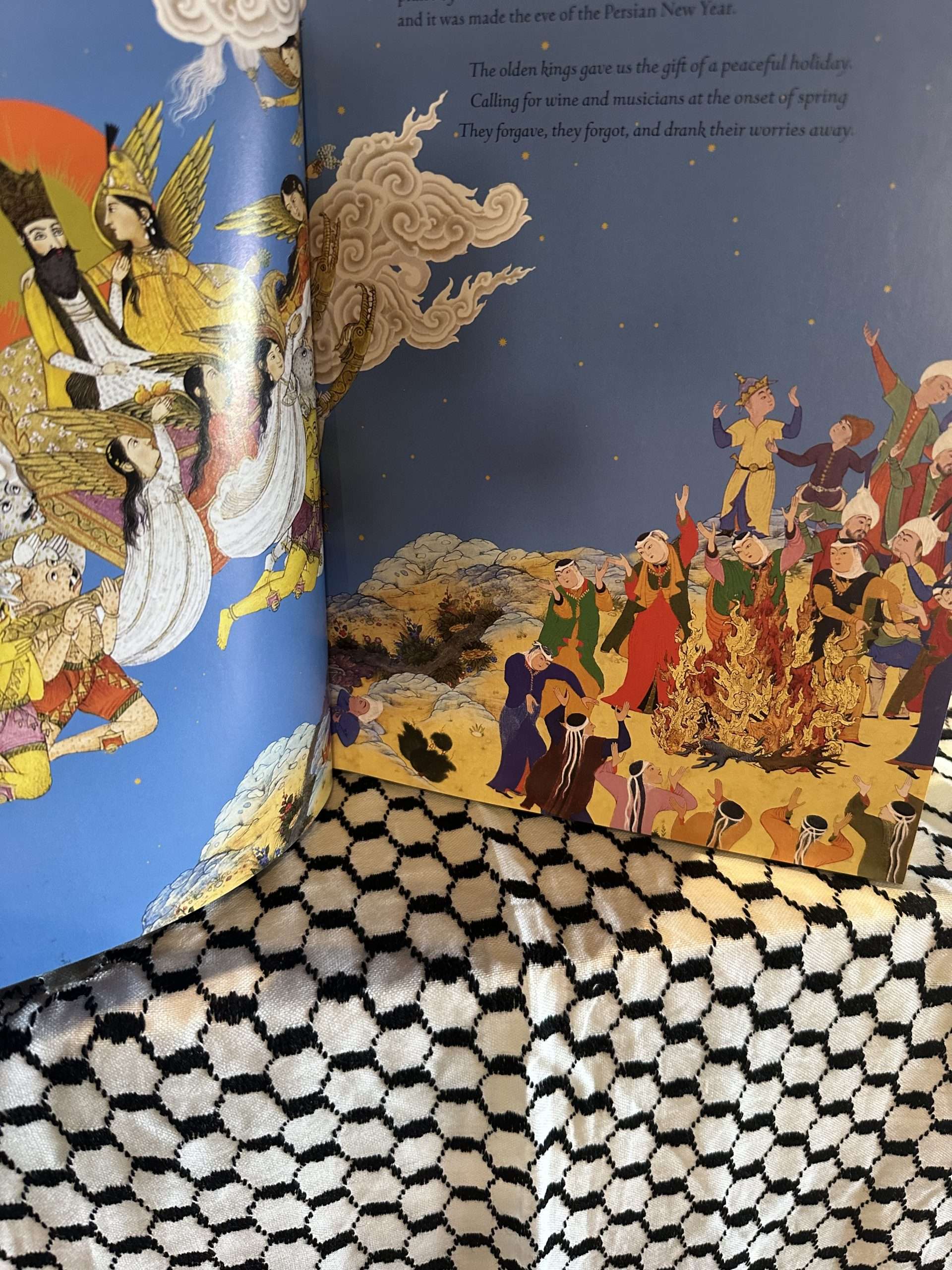
I arranged the keffiyeh, with a copy of Shahnameh, for a Nowrouz photo that year, when our daughter and her partner and their friends came to dinner, to share our sabzi pollo mahi.
After dinner we drew cards from a deck of Rumi quotes and told stories about our lives.
II
I first saw it when I was scrolling through Instagram one day, and then I had to google it. I’ve been thinking about it ever since. The kepenek, a traditional shepherd’s cloak from Türkiye, garment and shelter both. Protection from extreme conditions, made from a felting technique that I learned is UNESCO-recognised. Wear it as a jacket; sit on the ground and it acts as a tent.
I find it so strangely moving in its self-sufficiency, the overtones of loneliness. The refuge in rugged landscapes.
The way it transforms an act of survival into art.
III
I am haunted. Haunted by the T shirt I wore to shreds in childhood. On the front, a pink blob figure sitting at a table in the sun, drinking lemonade. Why was I so sure that it’s lemonade in that cup? I don’t know, but it was. I misremembered the figure at first, as a Moomintroll. But we found the photos, and I saw that it was indeed a blob.
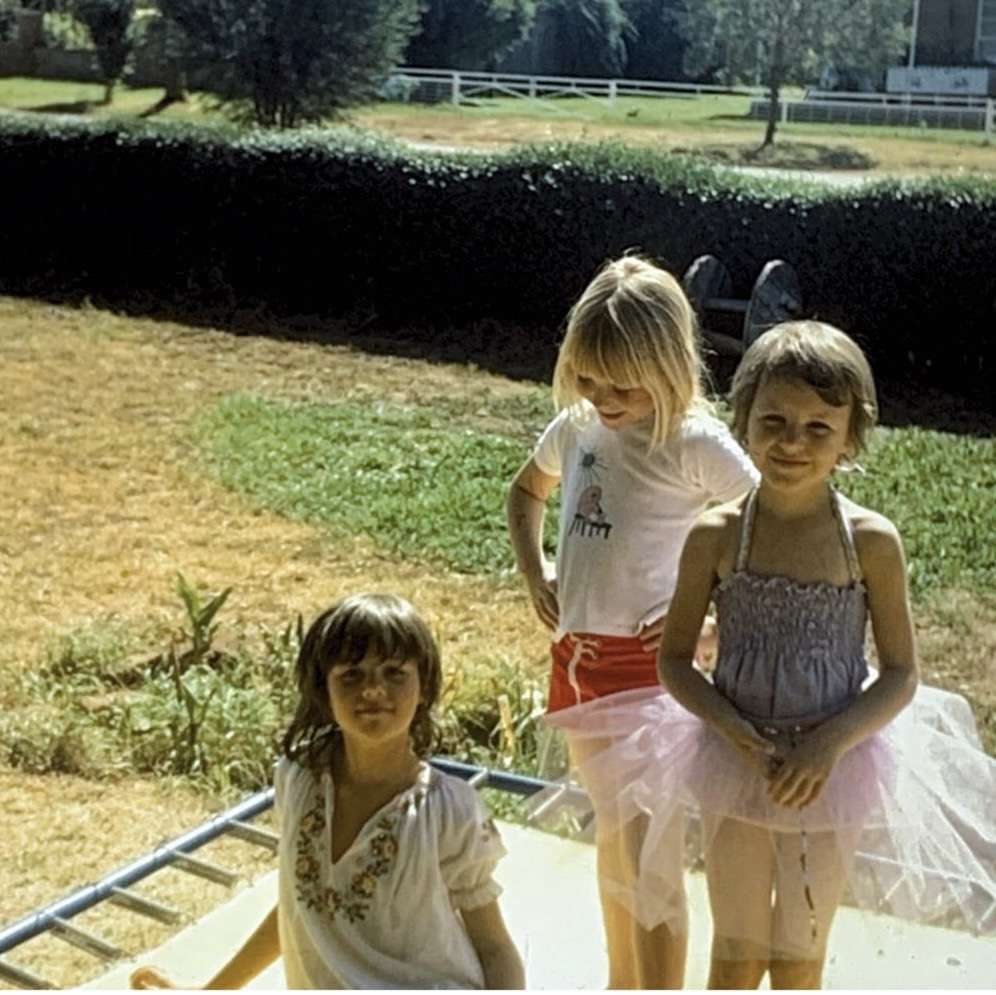
We found the photos. In the box of slides we used to go through regularly as children, projecting on to the wall pictures of us when we were younger, as babies, our parents looking like themselves but different too. Evidence that they existed before we did.
The photos. There we are in the doorway of the vicarage, on the trampoline. The three sisters. We laugh and say our personalities, our roles, are already all there, in tableaux, in the shadows and the sun.
I warn my younger sister that I’m going to have to include the photo in which she’s having a tantrum in the background. It’s too good to omit. So, there she is, the person who is now possibly the least likely of anyone in this world to throw a tantrum; she’s wearing a purple tutu and holding a butterfly wand and screaming at her little universe. You can see our rocking horse, Rossy, in the corner. I’m jumping on the trampoline, wearing the lost T shirt, watching.


Kylie Mirmohamadi is a writer and literary academic from Melbourne/Naarm. She has a PhD in History and is currently an Adjunct Senior Research Fellow in English and Creative Writing at La Trobe University. She was the recipient of a Wheeler Centre Hot Desk Fellowship in 2022 and her unpublished manuscripts have been highly commended in the Victorian Premier’s Literary Awards and shortlisted for the Dorothy Hewett Award (2020). She has been widely published in the academic sector, including her book The Digital Afterlives of Jane Austen: Janeites at the Keyboard (Palgrave Pivot, 2014). Diving, Falling, her first novel, was published by Scribe in 2024 and was listed as a best book of 2024 by Guardian Australia, The Saturday Paper, The Australian, InDaily South Australia, and Good Reading Magazine.
Her website is kyliemirmohamadi.com